The Cowherd and the Weaver Girl
Introduction
The Cowherd and the Weaver Girl is a classic tale of forbidden love in Chinese mythology. It tells the story of a mortal cowherd named Niulang and a celestial weaving fairy named Zhinyu. Their romance was doomed from the outset due to the divine laws that separated mortals and deities. Condemned to live apart, they were placed on opposite sides of the Milky Way. However, once a year, on the seventh day of the seventh lunar month, commonly known as the Qixi Festival, magpies form a bridge allowing the lovers to reunite. The tale symbolizes eternal love and perseverance against adversity and is often celebrated as China’s equivalent of Valentine's Day.
Cultural Significance
The Cowherd and the Weaver Girl holds a significant place in Chinese culture and folklore. It is a powerful representation of the themes of love, loyalty, and the barriers imposed by societal norms. The Qixi Festival, also known as the Double Seventh Festival, has become an occasion for lovers to express their affection and commitment. The story embodies the idea that true love can transcend any obstacles, a sentiment that resonates strongly in Chinese culture. This legend has inspired countless poems, paintings, and operas, reinforcing the cultural heritage and values surrounding love and devotion.
Qixi Festival Celebrations
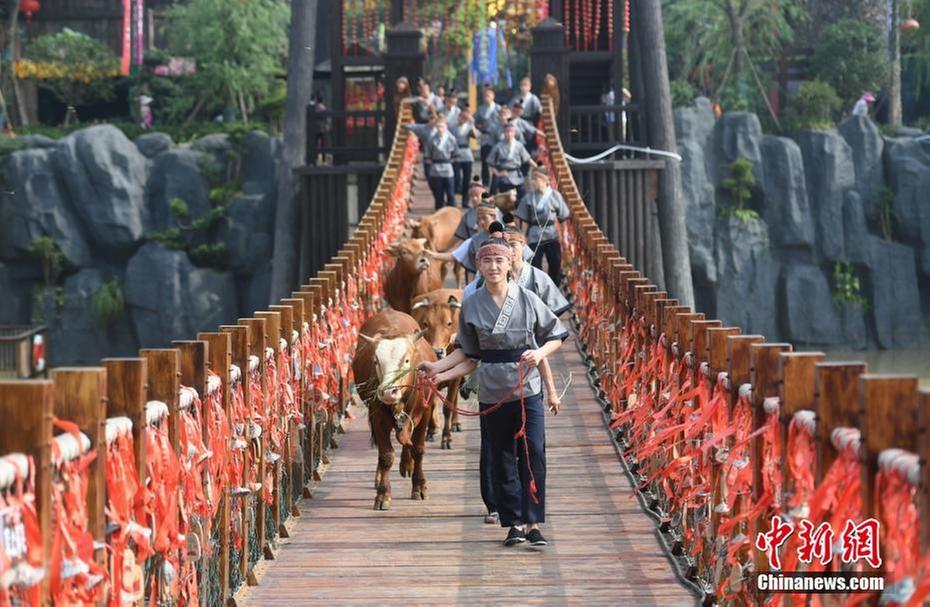
Qixi Festival is celebrated with various customs and traditions across China. In Ningxiang, located in Central China's Hunan province, the festival is marked by unique local events echoing the legendary romance. One such event is the Ancient Costume Dating festival where single individuals participate in activities reminiscent of the Niulang and Zhinyu story. Suitors dress as Niulang and parade their best cow past prospective partners, hoping to find their own Zhinyu. The event is steeped in tradition, with participants donning ancient costumes and engaging in rituals that symbolize binding destinies, such as the Red Thread activity, believed to unite lovers through a shared fate.
Symbolism and Interpretation
The Cowherd and the Weaver Girl is rich with symbolism, offering layers of interpretation beyond the romantic narrative. The Milky Way, which divides them, represents the physical and metaphorical barriers that lovers may face in their pursuit of happiness. The magpies, forming a bridge once a year, symbolize hope and the possibility of overcoming obstacles, even if temporarily. The tale also reflects the tension between personal desires and societal expectations, a timeless theme that continues to resonate with audiences. By celebrating this legend, individuals embrace the notion that true love is worth waiting and fighting for, regardless of the challenges that may arise.
Modern Influences and Adaptations
Over the centuries, the story of the Cowherd and the Weaver Girl has been retold and adapted in various formats, from traditional Chinese operas to contemporary films and television dramas. Each adaptation brings new perspectives and insights into the ancient tale, making it relevant to modern audiences. The legend's enduring popularity is a testament to its universal appeal and the timeless nature of its themes. In contemporary culture, the Qixi Festival has transformed into a commercial holiday akin to Valentine's Day, with couples exchanging gifts and expressing their love, further propagating the legend’s legacy.








